Course Description: Emphasis will be on using specialized photography equipment, composition, close-up photography, ethics and safety in nature and wildlife photography.
Course Evaluation Pass\Fail based on slide show assignment.
Field Trips
Burns Memorial Garden - for close-up photography
Calgary Zoo - field trip to photograph animals and plants (Thursday all day, meet at the North entrance to Zoo)
Suggested Equipment: 35 mm Camera, digital or film, compact camera can be used but has limitations. A tripod is recommended. Emphasis will be on using digital photo-equipment.
Assignment: Show Portfolio of 12 images Friday for critique - Portfolio of images to include at least one of:
plant, flower or tree - presented in an artistic manner
bird - try to get as close as possible, if it is in an enclosure try not to show the enclosure
arthropod (insect, crabyfish, crab or spider) - get as close as you can
zoo animal and show the cage or enclosure
landscape (prairie, mountains, lake, country, can include a road, fence, barn, river, trees etc
fungus, fern or other primitive plant
wild animal in its natural environment - bird, deer, elk, moose, squirrel, bird
Any baby animal - species of your choice
3 other wildllife or landscape photos of your choice.
Most of these pictures can be taken at the zoo, wild animal shots can include a bird in your neighbourhood or a spider on a flower. If you already have some of these photos you can use some of your exisiting images.
Course Plan – Dates: July 25, 26, 27, 2012
Day 1: Lessons in class, afternoon short session on Macrophotography in Burns Memorial Garden in front of SAIT – students to bring macro lenses and tripods.
On becoming a professional Nature\Wildlife photographer - slide show PD about 90 minutes - slide show PDF
Break
Guide to macrophotography tools and techniques - Slide Show PDF
Macrophotography E-book by Robert Berdan - Download PDF
Head down to Burns Memorial Garden to take photographs of flowers and insects
Day 2: Field Trip to Calgary Zoo meet at the north Gate LRT – 9:00 am outside the box office. Zoo passes are paid for by SAIT . Normal adult fee is $21. You are welcome to bring your friends or children with you but you will need to pay their fare.
Meet at the north entrance close to the LRT stop at 8:45 am - we will enter the zoo at 9:00 am
Robert will be at the following locations to assist you through out the day.
9:00 - 10:00 am Penquin exhibit - new
10:00 - 11:00 am Africa exhibit
11:00 - 12:00 South America and Eurasia Exhibit
LUNCH
1:00-2:00 pm - Enmax Conservatory plants and butterflies
2:00-3:00 pm - Austrailia exhibit
3:00-4:00 pm - Canada Wildlands
Dress for appropriately for hot weather, bring a bottle of water, tripods or monopods are optional. A zoom telephoto lens and macro lens are ideal. If you plan to shoot macro a tripod will be helpful.
Day 3: Lessons in class in the morning, Student presentations and critique in the afternoon. See check list of required images, students to show in class: 12-15 images.
Photographing Wildlife in your own backyard - see article
Discussion about photographing in the Zoo - Pros and Cons
Panoramic Photography - have students photograph panorama of SAIT during lunch time
LUNCH
Students present their portfolios for critique and discussion
SUMMARY
Where to learn more and improve - workshops, trips, camera store, importance of being exposed to different approaches and different instructors. The value of the web and books on photography.
Short Movie of Baby Foxes Photographed near Airdrie, AB
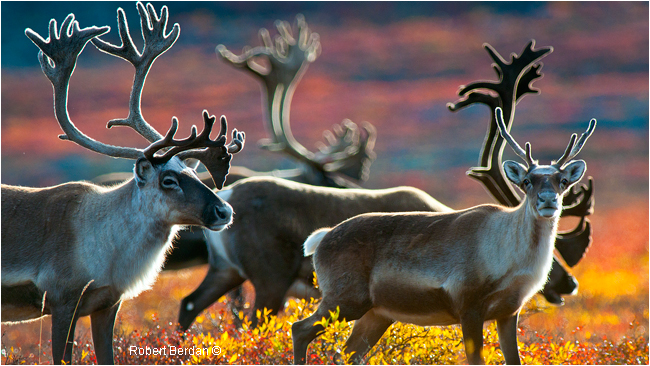
Barren land Caribou in the North West Territories
Great Gray Owl in Flight, 300 mm F2.8 lens + 1.4 X teleconverter.
Links to additional articles on Scenic and Wildlife Photography by R. Berdan